
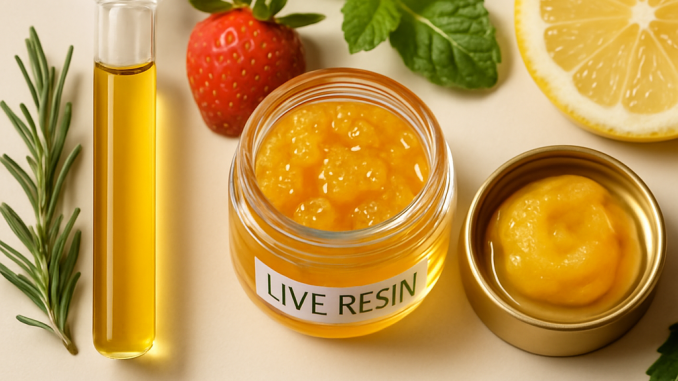
Choosing between distillate, live resin, and rosin for cartridges and retail pages
When a consumer or retailer evaluates THC liquids for cartridges, the immediate decision is often shaped by flavour expectations and how a product will appear on the product page. The source page title ‘Live Resin VS Distillate – HempElf.com’ is a retail-facing comparison that frames these formats in a shopping context, which is helpful because retail pages frequently pair format descriptions with ratings, cart messages and buying incentives.
That retail context matters: the snippet visible from the source shows shopping UX elements such as free-shipping thresholds and review counts (for example, ‘Only £50.00 away from free shipping!’ and ‘4,900+ Reviews 4.8 Rating. Excellent.’), and these elements influence how retailers present format differences and flavour claims to buyers. With cartridges, the format chosen affects both sensory outcomes and product-page copy, so reconcile online claims with the extract’s technical traits.
How distillate, live resin, and rosin differ in extraction and flavour
Distillate is typically presented as a highly refined, neutral THC concentrate where much of the non-THC material has been removed and potency emphasized. In practice, retailers describe distillate as a base that can be blended with specific terpenes to recreate or amplify flavour profiles; this makes it a flexible option for consistent product listings where uniform description and potency are priorities.
Live resin is commonly described on retail comparison pages as an extract that preserves a fuller terpene suite because it begins from flash‑frozen plant material. That preservation tends to lead to stronger, strain‑specific flavour notes that retailers often highlight when the shopping experience emphasizes aroma and taste differences across SKUs.
Rosin is solventless and produced under pressure and heat from flower or hash. Retail copy for rosin focuses on the absence of solvents and a ‘fuller’ original plant profile, which appeals to consumers who read labels closely and expect packaging labels to reflect a cleaner extraction method and fewer processing steps.
Terpenes, flavour profiles, and how to describe them accurately
Terpene content is the primary driver of flavour distinctions between these formats, and product pages should be explicit about whether terpenes are native (retained through processing) or reintroduced after refinement. Live resin and rosin commonly retain native terpenes that shape complex flavour notes, while distillate often relies on added terpene blends to produce a target profile.
When writing flavour descriptors, focus on verifiable sensory cues and lab results where available rather than broad marketing adjectives. Retail pages should state whether a flavour claim is based on native terpene content, a laboratory terpene profile, or a formulated blend; that level of precision supports informed purchases and reduces regulatory risk for merchants.
Cartridge compatibility and viscosity considerations for retailers and consumers
Cartridge performance depends on the liquid’s viscosity and the cartridge design. Distillate, being more refined, often flows more readily at room temperature and is commonly paired with a wide range of cartridge wicks and coil styles, which is why retailers seldom need to qualify cartridge compatibility for distillate-heavy SKUs.
Live resin and rosin typically require attention to cartridge design because richer terpene content and retained plant lipids change viscosity and heating behaviour. Retailers should note in product pages whether a liquid is best used in specific cartridge geometries or requires thicker-walled tanks or lower-resistance coils to avoid clogging or leakage; clear notes reduce returns and customer confusion.
Packaging, labelling, and product-page elements that reduce buyer uncertainty
Packaging and labelling must reflect both extraction method and on-package claims. The example retail page context shows typical product-page features such as cart messaging and review indicators; similar prominence should be given to extraction method, terpene declarations, and any solvent or additive information so that shoppers see the crucial details before checkout.
Because many product pages list multi-cannabinoid information, linkable references or simple glossary lines on the page can improve clarity for shoppers unfamiliar with cannabinoids. For background on non-THC cannabinoids that are frequently referenced on product pages, see the cannabidiol (CBD) overview, which helps explain how CBD entries are commonly presented alongside THC on labels and lab reports.
Retailers should also use visible trust signals: lab QR codes, certificate of analysis summaries, and clear reviewer counts or ratings help mirror the shopping cues seen on the source retail snippet. Small UX items—like visible shipping thresholds and trust badges—combine with technical lab information to create a lower-friction purchase decision.
Practical checklist for selecting and merchandising THC liquid formats
Below is a concise checklist retailers and consumers can use when evaluating a THC liquid format and its product presentation.
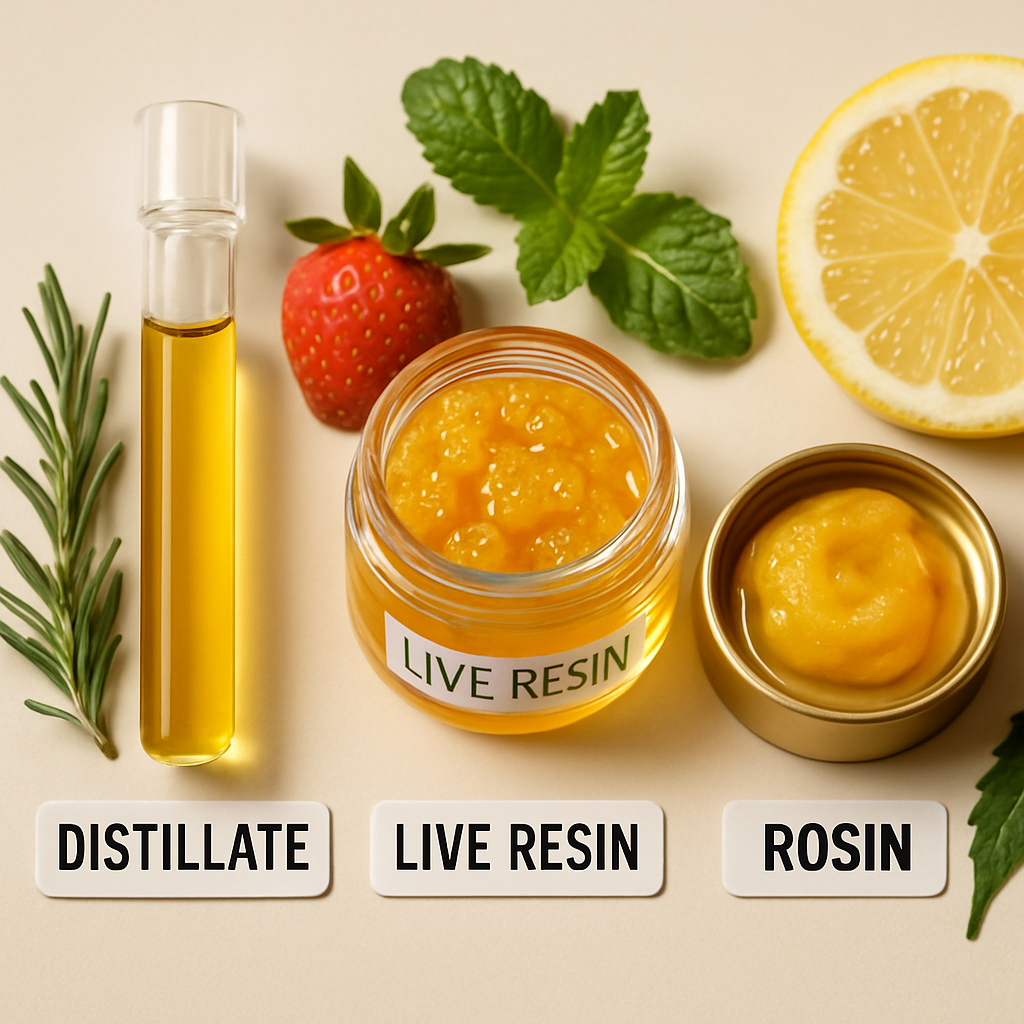
- Identify the extraction method (distillate, live resin, rosin) and ensure it is clearly labelled.
- Confirm whether terpene profiles are native or added and request COA summaries when needed.
- Match cartridge type to viscosity notes; list compatible cartridges on the product page.
- Display lab links, reviewer counts, and shipping or return policies prominently to reduce buyer hesitation.
Implementing these elements consistently across SKUs aligns online claims with the expected in-use performance of distillate, live resin, and rosin. That alignment improves consumer trust, reduces returns, and gives retailers a defensible approach to describing flavours and technical compatibility without overstating benefits.
In commercial practice, clarity wins: use precise lab data, standardised cartridge compatibility language, and visible packaging cues to communicate the real differences between these three THC liquid formats rather than relying on emotive or vague descriptors. Those concrete steps make it simpler for consumers to choose the format that matches their flavour expectations, device compatibility, and tolerance for processing methods.